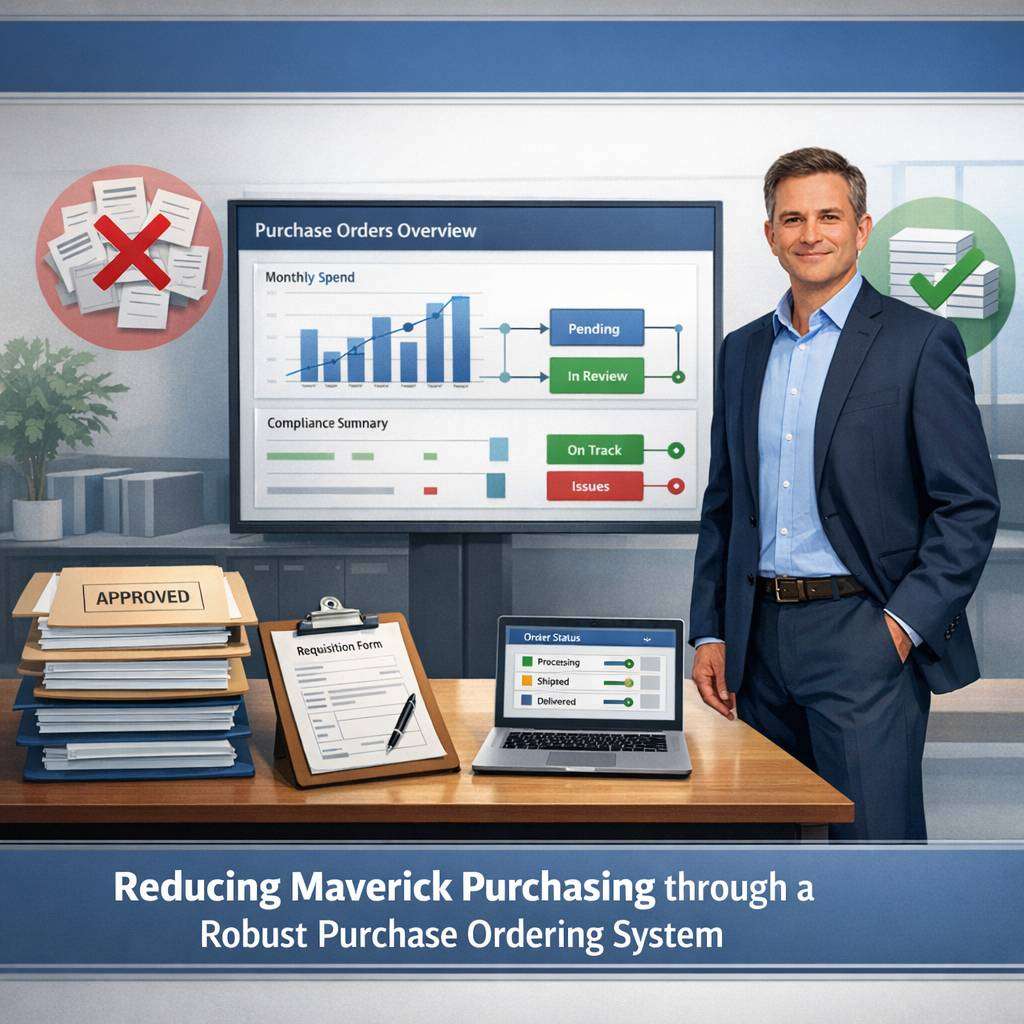
An introductory note: Maverick purchasing—where buyers bypass approved suppliers or negotiated terms—can derail cost control and supplier relationships. A well-implemented purchase ordering system acts as a friendly, enforceable ally in steering procurement through approved channels. By providing visibility, standardisation, and automation, organisations can reduce off-contract purchasing while preserving flexibility for legitimate needs. The following explores how a purchase orders software or po system software can help organisations in the UK and beyond manage procurement more effectively.
What a purchase ordering system does for you
A purchase ordering system, or po system, streamlines the requisition-to-pay process. It centralises requests, converts them into purchase orders, and routes them through predefined approvals. With software for purchase orders, team members gain real-time insight into what is approved, what is pending, and what has already been delivered. This transparency makes it harder for maverick purchasing to slip through the cracks, as requests are anchored to contract terms, preferred suppliers, and agreed pricing.
Key benefits include:
- Enforced supplier lists and contract terms
- Standardised approval workflows
- Auditable records of every purchase
- Improved spend visibility and reporting
- Seamless integration with accounts payable
A purchase ordering system streamlines procurement, improves visibility, and reduces manual errors. Implementing an efficient purchase ordering system boosts compliance and cost control. https://uk.indeed.com/career-advice/career-development/electronic-purchase-order-system It supports suppliers, budgets, and timely approvals within modern workflows.
How a po system supports governance and control
Governance is at the heart of reducing maverick purchasing. A robust po system software enforces governance in several ways:
- Compliance rules: The system can prevent ordering from non-approved suppliers or outside contract terms, unless an exception is approved.
- Centralised contracts: By linking purchase orders to contracts, pricing, and service levels, we ensure consistency across the organisation.
- Approval hierarchies: Multi-level approvals ensure that discretionary spend is scrutinised before commitment.
- Budget checks: Real-time budget validation helps forewarn of overspend and nudges users to seek the correct authorisation.
In practice, these controls make it easier for procurement teams to nudge users back to compliant procurement paths, rather than policing after the fact.
Implementing a UK-friendly purchase ordering system
For organisations operating in the UK, a purchase ordering system should align with local procurement practices, supplier databases, and VAT considerations. A good po system UK capability will:
- Support UK VAT rules and currency handling, ensuring correct tax treatment on purchase orders and invoices.
- Maintain a supplier database with UK-based vendors and preferred term agreements.
- Facilitate integration with UK accounting processes and ERP systems.
- Offer localisation options, including UK English spelling and terminology, to ensure user familiarity.
When selecting software for purchase orders in the UK, consider:
- Cloud vs on-premises deployment, with a preference for secure, scalable cloud solutions that meet GDPR and data protection standards.
- Ease of use and training requirements to minimise user resistance.
- Availability of supplier onboarding tools to quickly populate the approved list.
- A clear audit trail to support regulatory and internal governance.
How to maximise adoption and reduce resistance
Even the best po system software is only as effective as its adoption. To drive reductions in maverick purchasing, focus on:
- Clear onboarding: Provide role-based training so buyers, approvers, and suppliers understand their touchpoints.
- Intuitive interfaces: A user-friendly purchase order system uk will promote compliance by design.
- Quick wins: Start with high-spend categories to demonstrate immediate savings and contract adherence.
- Change management: Communicate the why behind controls, emphasising value rather than penalties.
By pairing policy with practical tools, you empower staff to do the right thing without feeling policed.
A robust purchase ordering system streamlines procurement, reduces manual errors, and accelerates approvals across departments. It enables real-time tracking, centralized catalogs, and standardized workflows, improving visibility and control over spending. By integrating supplier data, invoice matching, and budget checks, it helps ensure compliant purchasing and better financial planning. For further guidance on purchasing policies, view this resource: https://www.busfin.uillinois.edu/bfpp/section-7-purchasing/section-7-3. Implementing a well-designed system supports efficiency, governance, and negotiated savings.
The practical workflow: from requisition to compliant purchase
A typical purchase ordering process within a po system looks like this:
With software for purchase orders, steps 2–3 can be automated, and exceptions can be flagged for review rather than slipping through the cracks. This reduces maverick purchases by aligning every order with established contracts and approved vendors.
The broader value: data, reporting, and continuous improvement
Beyond enforcing compliance, a robust po system provides rich data for procurement analytics. Spend dashboards, supplier performance metrics, and contract compliance reports illuminate where maverick purchasing occurs and why. With these insights, you can adjust contracts, widen preferred supplier coverage, or refine approval levels. In time, the organisation develops a mature procurement ecosystem where compliant purchasing becomes the path of least resistance.
A robust purchase ordering system can streamline procurement, reduce errors, and improve supplier communication. Businesses gain better visibility into inventory, cycle times, and spend analytics, enabling smarter purchasing decisions and cost control. For more scalable options and expert guidance, explore a reliable solution that meets diverse needs. https://cloudb2b.co.uk/
Selecting the right solution: considerations for purchase order software
When evaluating options, aim for a balanced mix of features, usability, and supplier ecosystem. Consider:
- Integration capabilities: Ensure compatibility with your existing procurement, ERP, and financial systems.
- Supplier experience: A straightforward supplier portal encourages timely PO acknowledgement and accurate invoicing.
- Customisation: Tailor approval workflows to reflect your organisation’s risk profile and spend thresholds.
- Compliance and controls: Look for strong audit trails, change logs, and robust user access management.
- Support and updates: A reliable vendor should offer ongoing training, updates, and best-practice guidance.
If you’re exploring options such as “purchase orders software,” “po system software,” or “purchase order system uk,” you’ll find that many providers offer scalable solutions suitable for mid-sized businesses and large enterprises alike.
In summary, a well-chosen purchase ordering system is a practical, friendly, and effective way to reduce maverick purchasing. By centralising control, enforcing contracts, and delivering actionable insights, organisations can protect margins, strengthen supplier relationships, and foster a culture of compliant, efficient procurement. For teams seeking a reliable path to better governance, the right po system is a compelling partner.